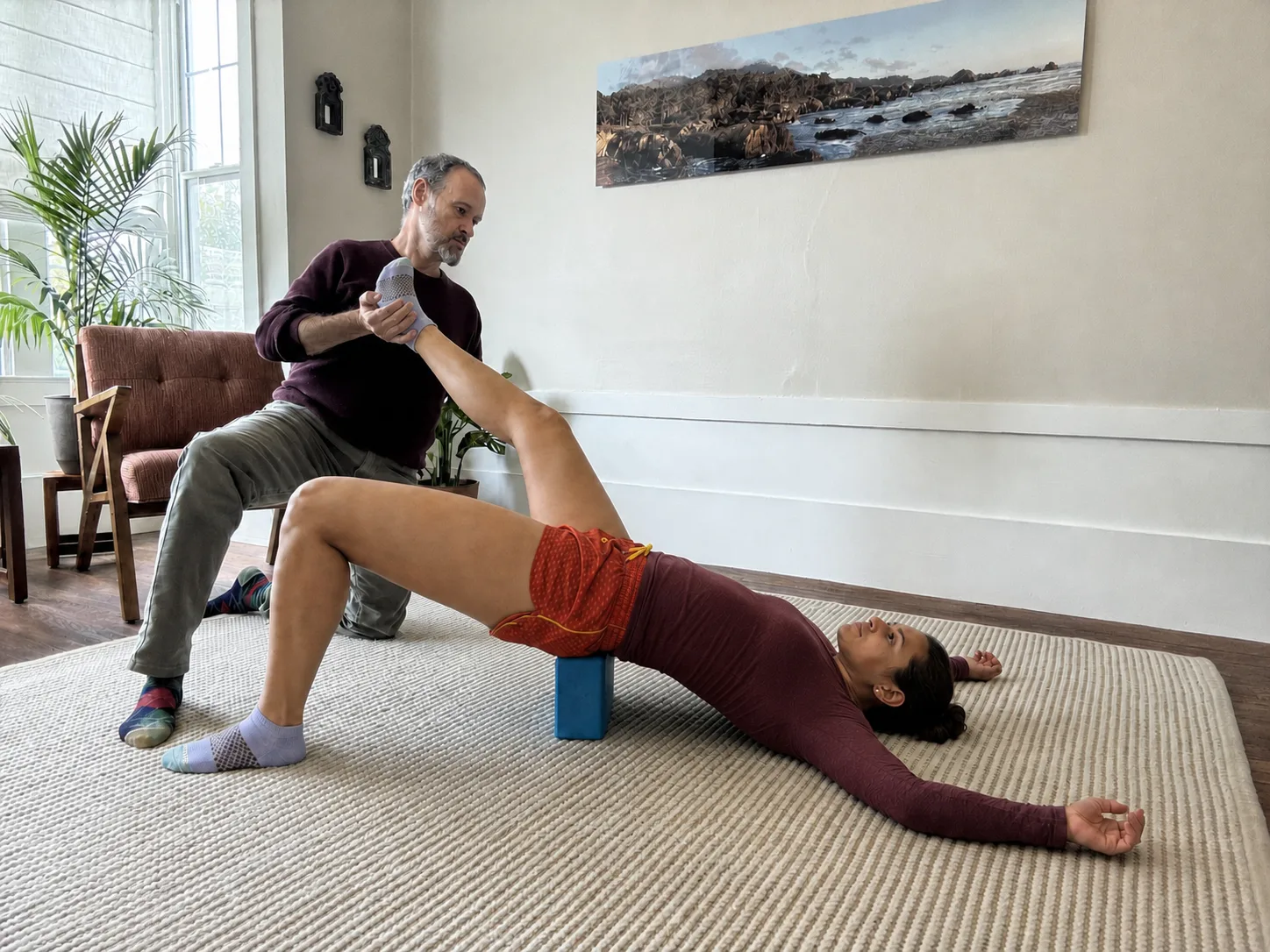
Your body builds up all this musculature around a flexed spine. Years of sitting, hunching over a desk, driving, scrolling on your phone. Your hips go into flexion, your low back follows, your shoulders round forward. Your body adapts to this shape, and one day you realize you can't move the way you used to. Not because something broke. Because your body forgot how.
The passive bridge is the protocol Garrett comes back to more than any other. For him and for most of his clients, this is where the biggest changes happen, in how the body feels and in how it moves through space. It's a full-body balancer, and the changes happen fast.
Think about what sitting actually does. Every vertebra in your spine has four joints. Twelve thoracic, five lumbar, seven cervical. Multiply that by four, then add the joints in your sacrum and hips. All of those joints need space and movement to work.
When you're flexed all day, those joints compress. They lose range of motion. The passive system, your bones, discs, and ligaments, starts working too hard. That's where disc herniations come from. The active system, your muscles and tendons, is also working too hard. It's just not working in balance.
The body works in simple ways. We complicated it. A chair is anything but ergonomic. Our shoes flatten the 26 bones in each foot that are supposed to move like hands. The feet get stiff, and it travels up like dominoes: the knees get stiff, the hips and low back get stiff. The whole body gets stiff because there's no longer dynamic movement from the ground up.
The passive bridge pushes the pelvis, hips, and low back back into a neutral position. It reverses the flexion pattern the body has been stuck in, but not by forcing anything.
When the body is properly supported, something shifts. The low back decompresses. The chest opens. The space created in the low back travels up the body. Shoulders that couldn't lay flat start to flatten. Hips that felt locked start to move. The whole body begins to reorganize.
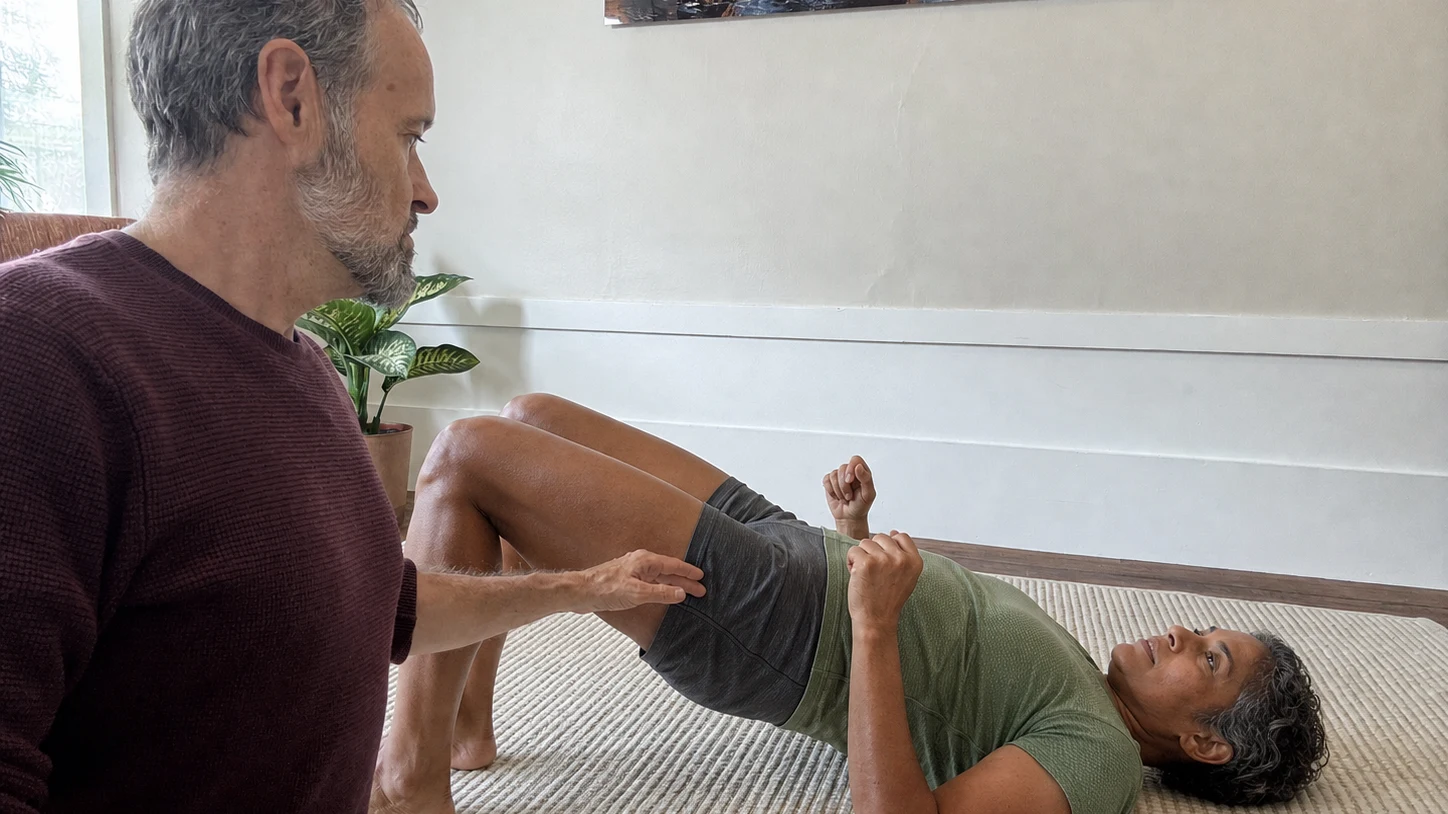
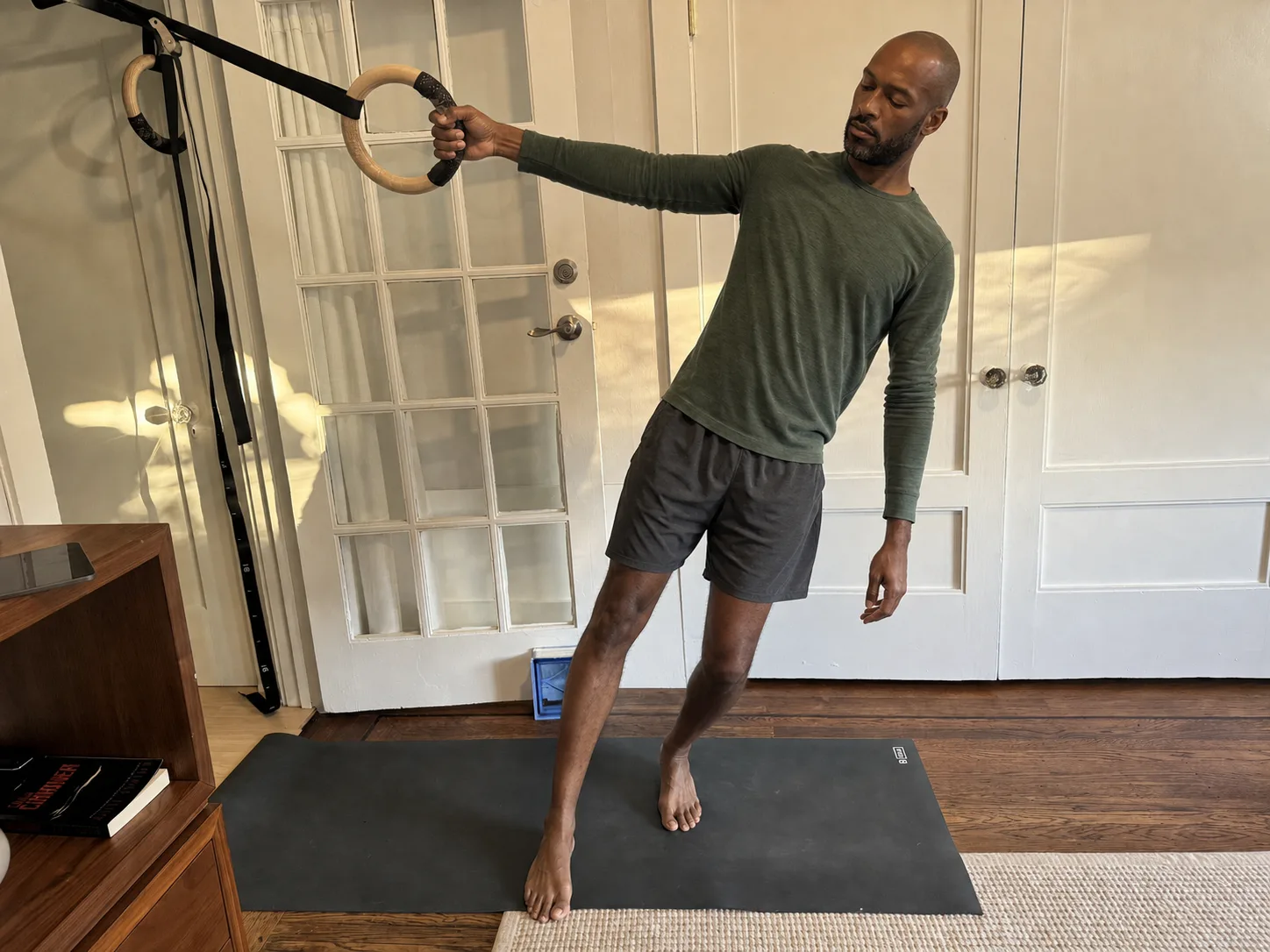
Garrett calls it a moving meditation, because what happens next is entirely your own. Small, spontaneous movements start to ripple through the body. Not big, forced stretches, just the body finding its way back to how it's supposed to feel. Nobody does this the same way. It depends entirely on what the body needs in that moment.
This shouldn't feel like work. There's no effort involved. The parts that have been working too hard start to settle down, and the parts that haven't been working at all start to wake up.
That's just the body releasing stiffness in the joints and reorganizing. Every time you do it, it feels a little different, because your body is a little different each time.
The passive bridge is for people who are tight and restricted, whose joints don't move much, whose musculature has locked down around a flexed spine. If you sit most of the day and your hips, low back, and shoulders feel like they've been slowly shrinking for years, this is the protocol that gets that movement back.
If you're very flexible, maybe hypermobile, where your joints move easily but nothing feels stable, that's a different situation. The passive bridge alone could create more passivity in the body when what you actually need is the active bridge to hold those joints in place. Most people end up doing a combination of both, and getting the ratio right is the difference between relief and frustration.
At the end of the day, when I get done with the bridge, I really do feel like a different person.Garrett
The passive bridge looks simple. It is simple. But the details make or break it. Where exactly the support goes on your body varies by anatomy. How you position yourself matters. The quality of the movement matters. Whether you should be doing the passive bridge, the active bridge, or a specific combination of both depends on what's going on in your body right now, which is what a session is for.
If years of sitting have left your low back and hips feeling locked, we can help. See how the Amari Method restores the movement that's still there.
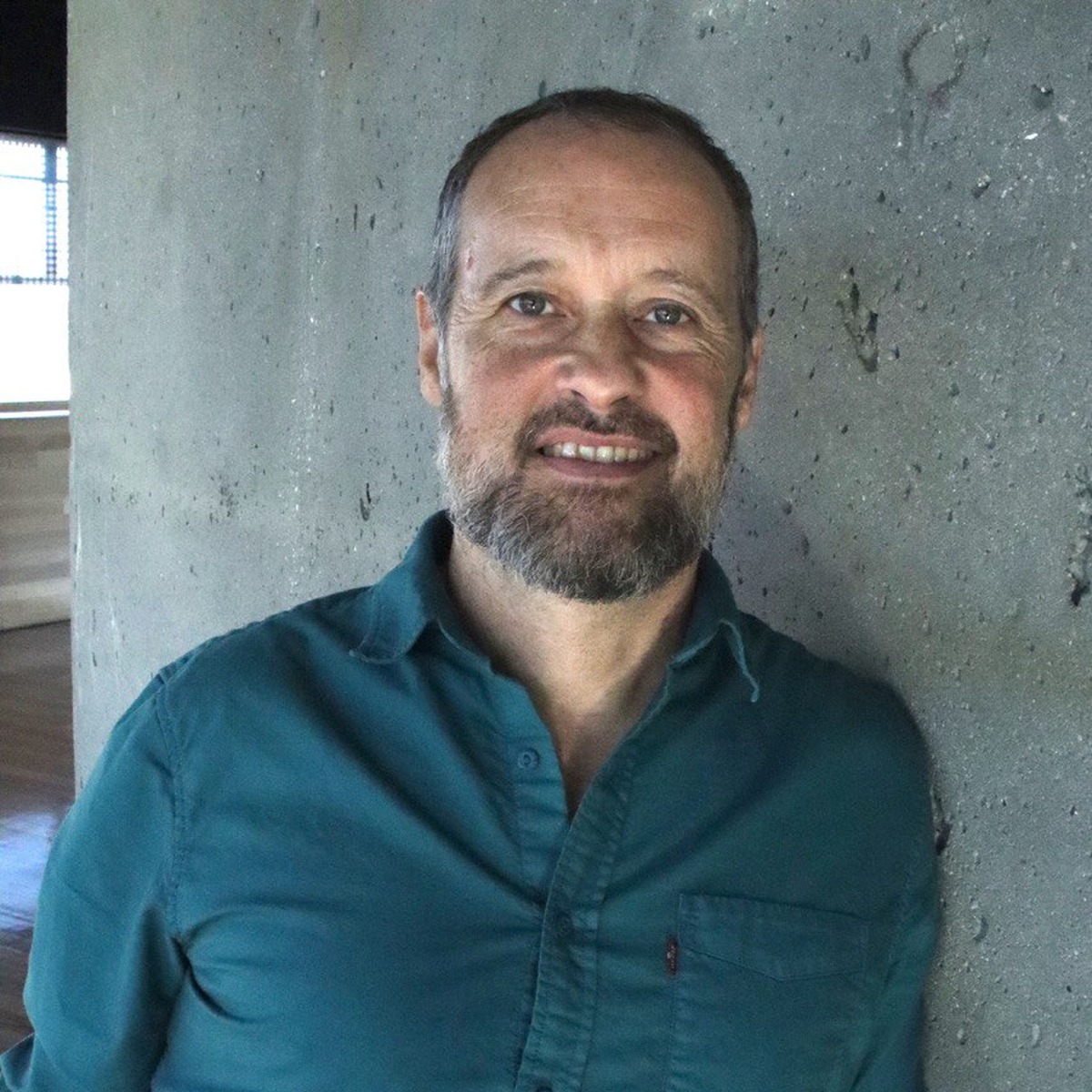
Garrett has spent 25+ years in hands-on practice. He built the Amari Method after using its own protocols to resolve his own carpal tunnel and plantar fasciitis.
Book a session with Garrett. If you don't experience noticeable relief, we keep working with you until you do, at no additional charge.
$29 · Amari Assessment · 50 minutes · San Francisco