Your elbow aches. Outside if it's tennis elbow, inside if it's golfer's elbow. Gripping hurts. Typing hurts. Turning a doorknob hurts. You've tried rest, ice, a brace, maybe a cortisone shot. Each one helped for a while. The pain keeps coming back.
Here's why. Tennis elbow and golfer's elbow are tendinitis, inflammation where forearm muscles attach at the elbow. The tendons are inflamed because the muscles attaching to them are chronically fatigued, and they're chronically fatigued because they've been working in one direction for years without ever being asked to work in the other.
Your forearm rotates two ways, inward and outward. Almost every daily movement rotates it the same direction: typing, gripping a phone, holding a wheel, turning a screwdriver, scrolling. The muscles that drive that rotation get used all day. The muscles that drive the opposite rotation barely participate.
Over time, the overworked side gets stuck in a state of constant low-level tension. The tendons connecting it to the elbow never get a break, and they start to inflame. That's where the pain shows up, at the bony point of the elbow where the muscle attaches, but the source isn't the elbow. It's the pattern dragging on it. Tennis elbow is the outside of the joint, golfer's elbow is the inside, but the mechanism is the same: one rotation direction overused, the other underused, the elbow paying the bill.
Rest stops the irritation temporarily. As soon as you go back to typing or gripping, the same overworking direction resumes, and the same inflammation follows. A brace stabilizes the joint and offloads the tendon. It can be useful, but the brace is doing the job your underworked side should be doing, and wearing it long enough lets those muscles go quieter still.
A cortisone injection turns down the inflammation directly. Real relief, sometimes for weeks. Then the same pattern recreates the same inflammation around the same tendon. None of these are wrong, exactly. They manage the symptom while the pattern behind it continues, which is why the pain keeps coming back.
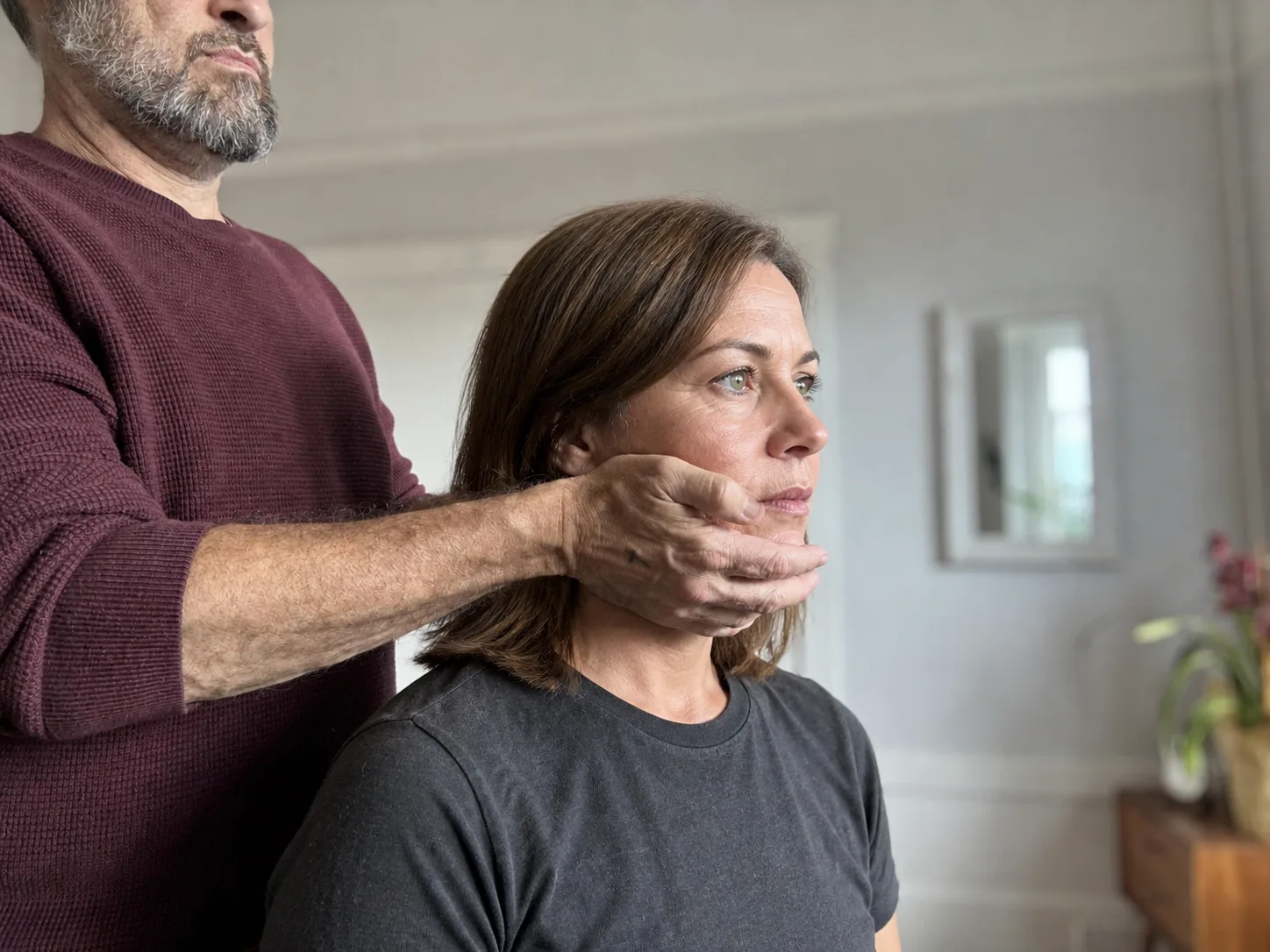
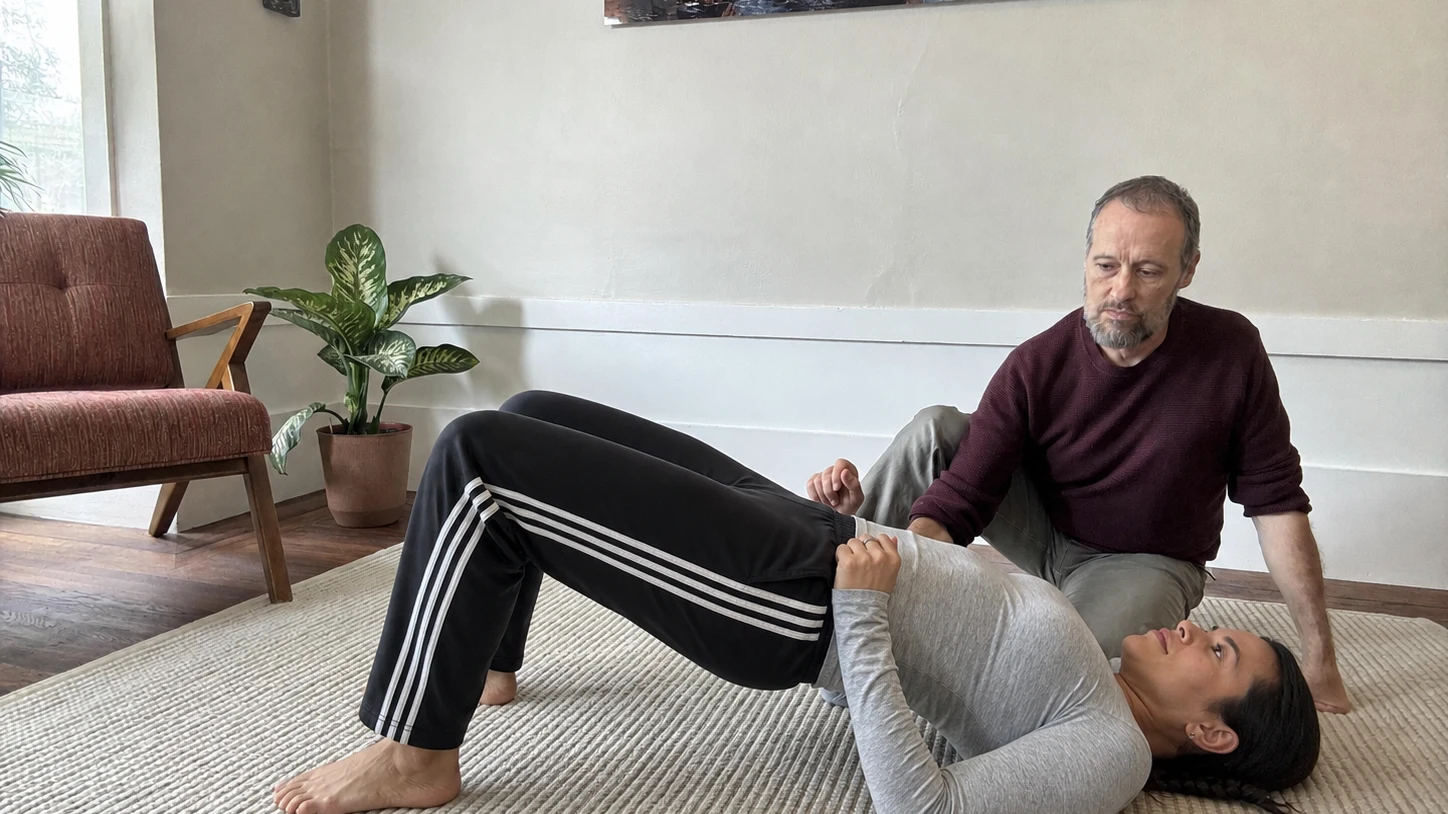
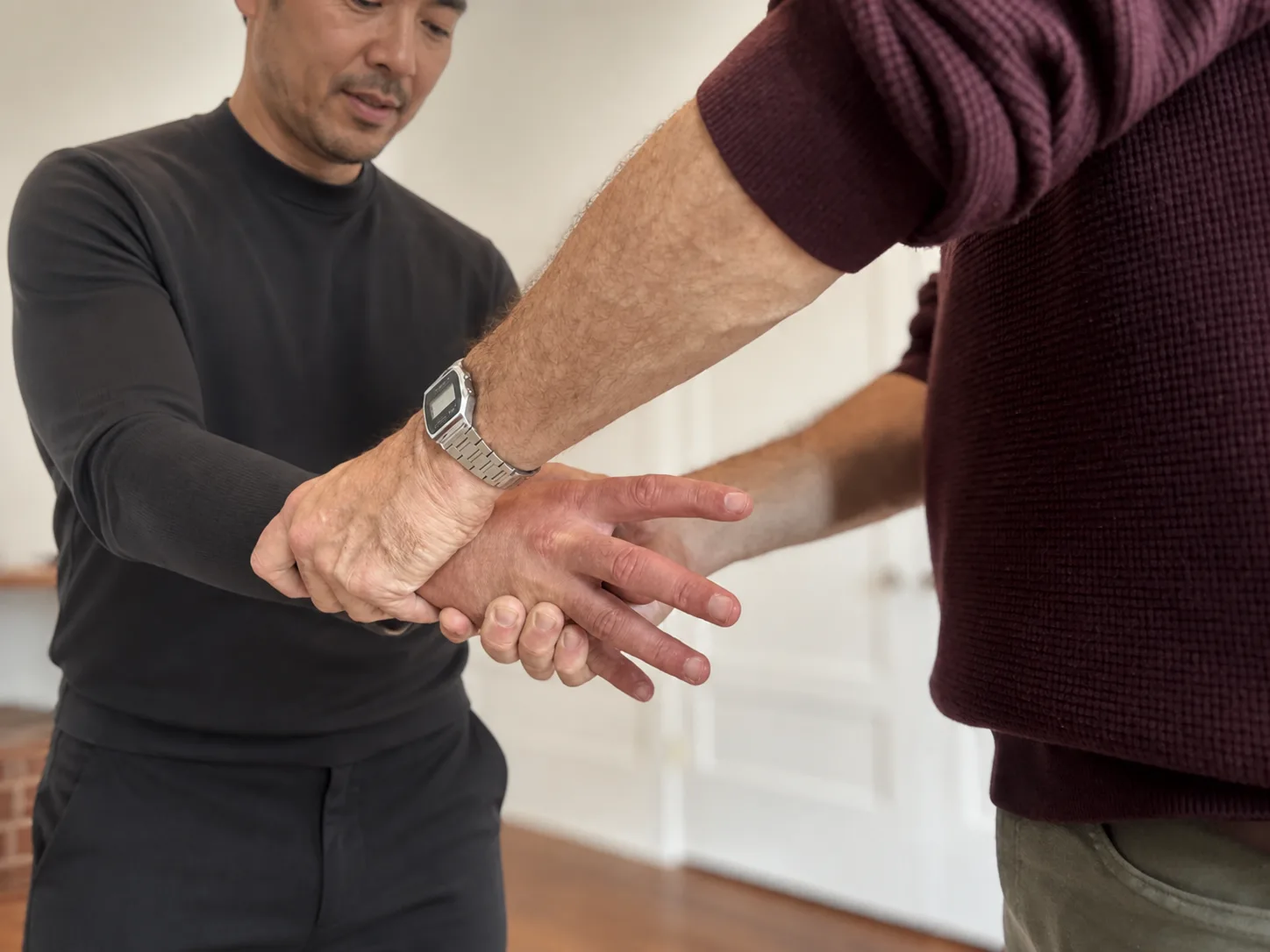
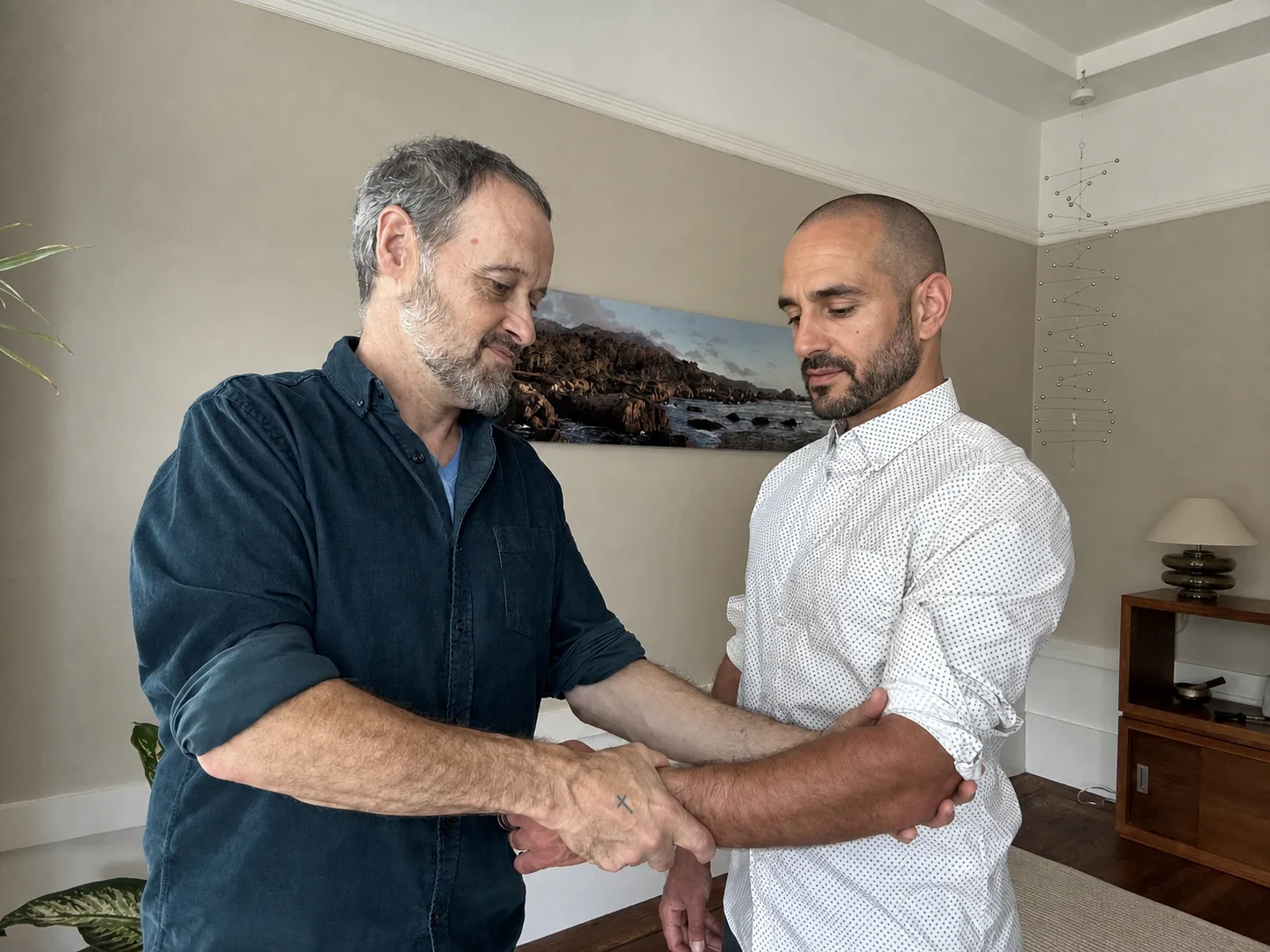
The Elbow Reset is a brief, gentle resistance protocol. You twist your forearm in the direction it rarely goes, the underworked direction, while your other hand resists at the wrist. Nothing actually moves. Both forces match.
The underworked muscles, asked to do something for the first time in years, wake up. Within a few sessions they start participating in your daily movements again. The chronically overworked side stops being the only thing pulling on the tendon, the inflammation has space to settle, and the pain pattern starts to come apart. For tennis elbow, the rotation is outward. For golfer's elbow, inward. Most people need the outward direction, since modern life is overwhelmingly biased toward inward forearm work.
Clients tell me the protocol gives them back a forearm they didn't know they had lost.Garrett
The first thing most people notice is how much tension was sitting in their forearm without their awareness. In the weeks after, the elbow pain dials down before it disappears. Gripping a coffee cup stops being a thing you brace for, and typing for an hour doesn't trigger a flare. The elbow becomes background again, and the relief shows up as more than less pain. It shows up as more forearm, strength people had written off as gone.
The protocol looks easy from a description: twist your wrist, the other hand resists. The details are the difference between a release and irritating the very tendon you're trying to settle.
Too hard and you create more tendon stress. Too soft and the working arm has nothing to push against.
The wrist, not the hand. Wrong leverage point and the rotation never engages the right muscles.
Depends on whether your pain is outside or inside, severe or mild, recent or long-standing.
Most people, given the description alone, end up squeezing too hard and aggravating the pain. In a session, Garrett gets the grip calibrated, shows you what the right force feels like, and corrects the position in real time. After that you can do the protocol anywhere, ninety seconds, twice a day.
If your elbow keeps flaring no matter how much rest or bracing you give it, we can help. See how the Amari Method finds the pattern behind it.
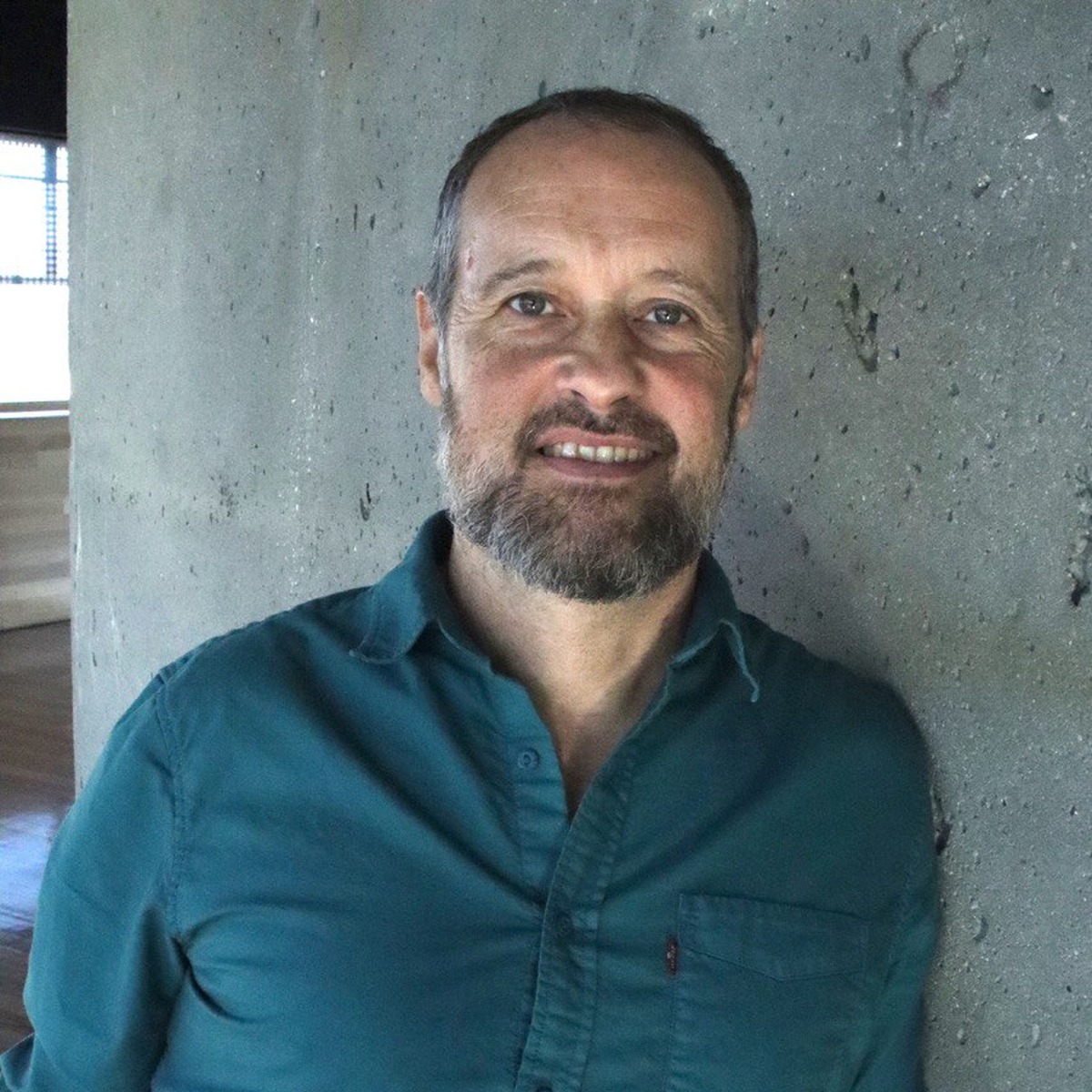
Garrett founded the Amari Method to resolve chronic pain by finding where the body's gone out of balance and correcting it. He sees clients in San Francisco and offers virtual sessions nationwide.
Book a session with Garrett. If you don't experience noticeable relief, we keep working with you until you do, at no additional charge.
$29 · Amari Assessment · 50 minutes · San Francisco